

Ketamine-Assisted Therapy
Safety Practices with Ketamine
Your safety is of utmost importance and Process Ketamine Studio is dedicated to providing the framework for an optimal healing environment.
Medically reviewed by Dr. David Mahjoubi, MD, Board-Certified Anesthesiologist
Ketamine has a low probability for addiction
Since its FDA approval in 1970, ketamine has been utilized as an anesthetic and is now prescribed off-label for diverse purposes, although not without potential risks. Misuse, encompassing unauthorized consumption or excessive use without clinical guidance, can lead to psychological and physiological dependence. However, research suggests that such dependence primarily stems from recreational misuse. In clinical settings adhering to proper protocols, the risk of addiction is significantly reduced. Ketamine's minimal addiction potential is reinforced by its Schedule III classification, unique impact on dopamine production, and absence of patterns promoting habitual use. Research studies [1][2] underscore the importance of responsible clinical use, emphasizing the effectiveness of properly administered ketamine therapy in mitigating addiction-related risks.
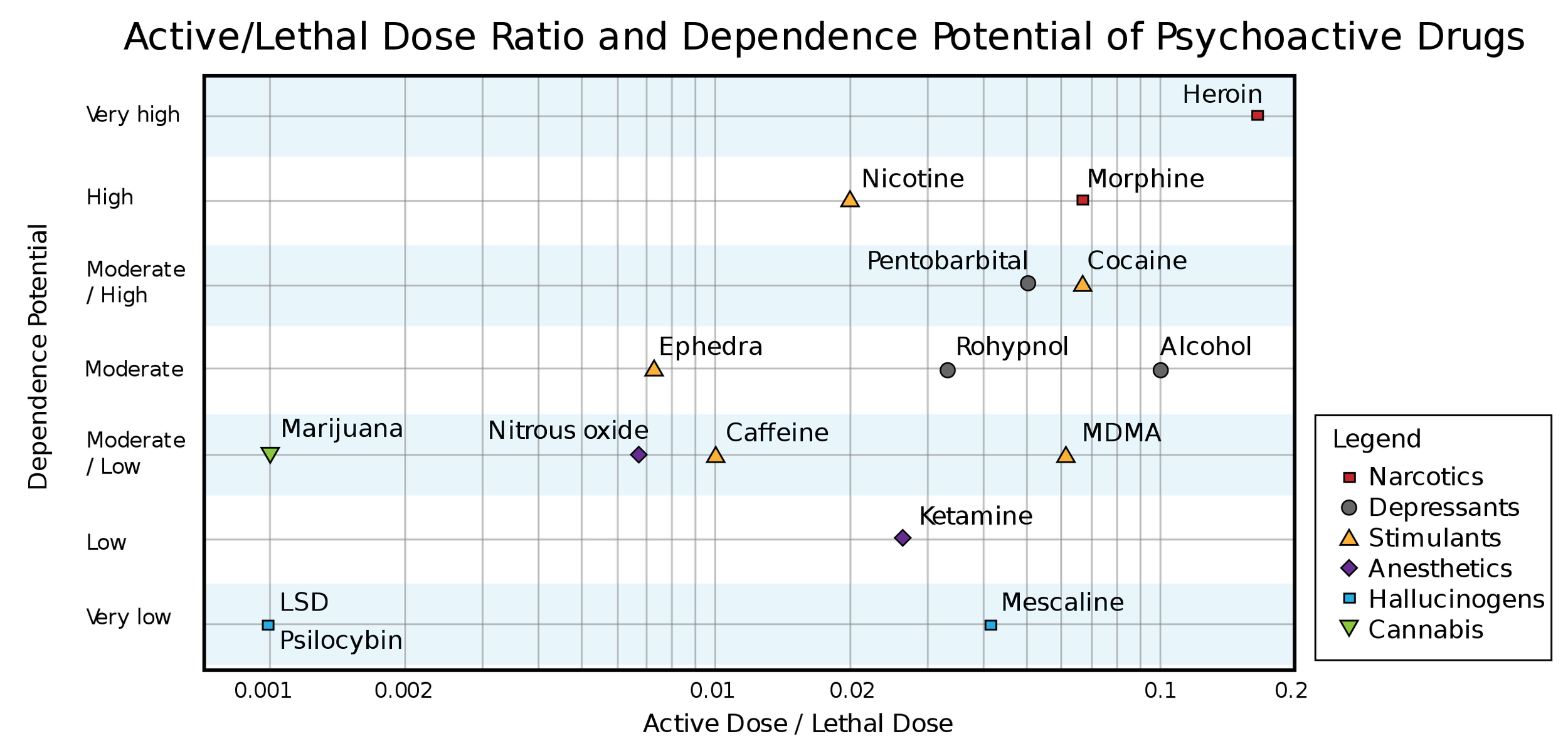
Active/Lethal Dose Ratio and Dependence Potential of Psychoactive Drugs. Data source is Gable, R. S. (2006). Acute toxicity of drugs versus regulatory status. In J. M. Fish (Ed.),Drugs and Society: U.S. Public Policy, pp.149-162, Lanham, MD: Rowman & Littlefield Publishers. This is simply a rescaled version of the file listed in "other versions".

Ketamine is safe and effective
Ketamine therapy demonstrates a high level of safety, with a minority of patients reporting side effects. Common concerns include nausea, headache, dizziness, or vision changes. These side effects are generally minor and temporary and typically diminish shortly after the session. Other symptoms may include elevated blood pressure or heart rate, dry mouth, loss of appetite, vomiting, and increased intraocular or intracranial pressure. Thus, it is imperative for patients to tell the medical provider prescribing the ketamine if they have hypertension or glaucoma. It must be noted that the recreational use of ketamine is unsafe due to the possible presence of harmful and lethal substances added to the source and can have significant side effects on the urinary tract, such as ketamine-induced cystitis. Therefore, within a medically supervised and guided ketamine-assisted therapy protocol, there is an exceptional safety profile, and it is a well-tolerated and effective treatment option for various conditions.
It is recommended to consult with a healthcare professional to fully understand the potential risks and benefits associated with ketamine treatment.

Safety of your dosing journey:
Chaperone: To optimize your outcomes and prioritize safety during ketamine treatment, it is essential to have a chaperone present to assist with the ketamine therapy protocol and provide assistance if needed.
Avoid operating vehicles or machinery: After the treatment, refrain from operating a vehicle or heavy machinery (such as cars, motorcycles, or bicycles) until you have had a full night of restful sleep.
Medication considerations: It is important to follow your medical provider’s guidelines as to when to take any previously prescribed medications that may interfere with your ketamine experience.

Side effects of ketamine treatment may include elevated blood pressure or heart rate, altered sense of time, anxiety, dry mouth, loss of appetite, nausea/vomiting, blurred vision, elevated intraocular or intracranial pressure, excitability, mental confusion, nystagmus (rapid eye movements), restlessness, slurred speech, synesthesia (a mingling of the senses), diminished ability to see/hear/feel.
It is important to note that ketamine treatment is not recommended if you have any of the following conditions: Allergic to ketamine, uncontrolled high blood pressure, symptoms of psychosis or mania, CHF or other serious heart problems, severe breathing problems such as COPD, history of elevated intraocular (closed angle glaucoma) or intracranial pressure, untreated hyperthyroidism, other serious medical illnesses, are pregnant, nursing, or trying to become pregnant.